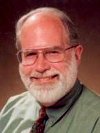
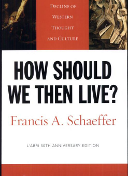
Today, Jan. 30th, 2012, is Francis Schaeffer's 100th birthday.
We at francisschaefferstudies.org constantly strive to communicate the value of Dr. Schaeffer's work, a task that can be overwhelming and sometimes nearly impossible to communicate succinctly. Yet, we are determined that if the world does not understand Schaeffer, it will not be for lack of trying on our part. So the following paragraph will be my attempt to encapsulate something of the core reasons why we are remembering Schaeffer on this, his centennial year. I will explain simply by telling you how that he has helped me.
Schaeffer's cultural analysis helped me understand the world and inspired me to go deeper as a Christian at a very critical time in my life. His apologetic inspired a way to engage the non-believer with integrity and sincere compassion, respecting the created order while remaining honoring to God. Yet his two concepts of 1.) Truth & Love, and a 2.) "moment-by-moment" spirituality, have thoroughly transformed my walk with Christ and relationship with others. He is the most significant mentor in my life and more than any other scholar, his works have constantly and consistently lead me to Christ and His Word for the answers against real-world adversity in the whole of life. So let me be plain, the reason I love Dr. Schaeffer, is for how his works have directed me to Christ and aided in helping me understand how to live in a post-Christian world.
We at francisschaefferstudies.org have the solid conviction that his thought must be passed on to the next generation. In fact, we feel that it is critical for the future of our culture. Schaeffer's vast mental reach, significant moral character, simple honesty and ability to speak with a near prophetic understanding stand starkly in contrast to so much of what has caused disillusionment with Evangelicalism today. The church as a whole must turn to Schaeffer's maxim of "honest answers to honest questions," else risk losing another generation to secularism. It is our prayer that as we expand this work, that we are able to continue to provide a service to the Francis Schaeffer community to that end.
If you can't make it to Kansas City to attend the Francis Schaeffer Centennial Celebration, you can do the next best thing... follow it on line!
Content from the event will be posted in multiple places so you can pick the one that best works for you. You will see regular updates, pictures, videos and more.
It seems hard to fathom, that the average college age Christian student may have never heard of Francis Schaeffer, but that is exactly what concerns scholars like Donald Williams, who has witnessed this first hand as an educator. He describes teaching a class of 125 students and asking them at the close of the class, “How many of you had never heard of Schaeffer or L’Abri before taking this class?” Soberly he watched, as nearly every hand in the class went up. Donald Williams notes that this never would have happened even five years ago.
In an era when culture is under siege, and given the value of Schaeffer's thought in this area, one has to wonder how this could happen. One of the symptoms of the system formerly known as "modernism," (now Liberalism) is the tendency toward forsaking the value of history and constantly seeking the latest and greatest thing. To what extent has the church adopted this model? Time will tell, but this is one of the motivating factors behind francisschaefferstudies.org. Our desire is to introduce Schaeffer's thought to a next generation that is so in need of it. A generation in search of truth and answers.
I recall speaking to a man last year over dinner and talking to him about Schaeffer and L'Abri. He was greatly moved and overwhelmed by what he heard. Not because Schaeffer is some sort of icon, but because his thought and the work of L'Abri was so relevant to his life and struggles in the real world. The next week we planned to meet again, however he notified our mutual friend that he would not be able to make it. He had promptly decided to take the week off from work and drove to L'Abri in Rochester, MN. His hunger for truth, is typical of the next generation. When they are impacted by it, it naturally invokes passion and desire for greater truth.
As a new year starts, and new presidential hopefuls begin their caucus runs, the name Ronald Reagan has been dropped many times over. Many seeking the office, have regularly touted the need for a true "Reagan Conservative." Some in the media have even sought to cast our current president as "Reaganesque" last year during Reagan's Centennial Birthday Year. Yet, many may not know of the name of a man who had an important influenced on Ronald Reagan and so many Conservatives to follow. That name of course is Francis Schaeffer. Schaeffer in fact was influential to several presidents in that era. He visited the White House to meet with Gerald Ford as well as George H. W. Bush.
Schaeffer was not a politician, a political guru, or even a politically driven person. Rather, he was a pastor-teacher-philosopher that cared deeply about people and culture and realized the role that politics play. His care and concern are something which Ronald Reagan deeply admired about him. Here is a quote from Ronald Reagan after Schaeffer's passing.
"He will long be remembered as one of the great Christian thinkers of our century, with a childlike faith and a profound compassion toward others. It can rarely be said of an individual that his life touched many others and affected them for the better; it will be said of Francis Schaeffer that his life touched millions of souls and brought them to the truth of their creator." ~ Ronald Reagan
It is quite telling that in this election cycle, Reagan can be admired by the Left by separating him from his thought, and Schaeffer who in some very significant ways contributed much to Reagan and Conservative thought, is still misunderstood and misrepresented. It is such that a Conservative politician might not dare mention Schaeffer in a political context without suffering criticism. The mistaken accusations of "dominionism" last year seem to evidence this. Yet, it's rather strange that no one is accusing Reagan of such positions. We have to question all such attacks as attempts to silence, and further question the greater potential of the state to manipulate as Schaeffer warned.
Given the current climate of Reagan name capital, and the obvious desire to manipulate, it will be important to remember what both Reagan and Schaeffer warned about in the future of America, namely "statism." In closing, I would like you to read this excerpt from Dr. R.C. Sproul recounting a talk he once had with Schaeffer on the subject.:
"About thirty years ago, I shared a taxi cab in St. Louis with Francis Schaeffer. I had known Dr. Schaeffer for many years, and he had been instrumental in helping us begin our ministry in Ligonier, Pennsylvania, in 1971. Since our time together in St. Louis was during the twilight of Schaeffer’s career, I posed this question to him: “Dr. Schaeffer, what is your biggest concern for the future of the church in America?” Without hesitation, Dr. Schaeffer turned to me and spoke one word: “Statism.” Schaeffer’s biggest concern at that point in his life was that the citizens of the United States were beginning to invest their country with supreme authority, such that the free nation of America would become one that would be dominated by a philosophy of the supremacy of the state." Read The Full Article
100 years ago, one of the most significant leaders of the Christian church in the 20th century was born on Jan 30th, 1912 to a middle-class family of German descent in Germantown Pennsylvania. His name was Francis August Schaeffer.
People know of Schaeffer from his various areas of influence. Some encountered him personally at L’Abri, some know him from his early works, some know him from his films, still others know him from his public stance, later in his life, on the ethics of life, euthanasia and abortion. Others may have discovered Schaeffer through the tape ministry of L’Abri, or perhaps heard his radio broadcast across Europe. Some may have seen him personally during one of his many book or film tours, and some may know of his significant role at the first Lausanne Congress in 1974.
Depending on the sphere in which you discovered Schaeffer you may have picked up on something of what he was saying. Yet for many their exposure to Schaeffer has been incomplete, and some have even gotten the wrong ideas about him. However, beyond all of this, there is a generation today that has never heard of him, where once Schaeffer was a household name among Christians, you could say the name "Francis Schaeffer" in public, but today even some Christians might not know who you are talking about. Yet all the while, it is likely that many of the views and concepts of their worldview and those pastors who they are listening to have been impacted in some way by Francis Schaeffer.
So at the beginning of 2012, we are celebrating the Francis Schaeffer Centennial, by honoring him on his birthday weekend, with a celebration on January. 28th, 2012 (his birthday is January 30th) and reintroducing his thought and works through various ways throughout the coming year, staring with several videos and the Life & Works of Francis & Edith Schaeffer lectures. We are inviting you to join us by sharing the video above with everyone you know.
If you are in Kansas City, visit our Schaeffer Centennial page for details on the Francis Schaeffer Centennial event. If you plan to attend here in KC please let us know on our Facebook Event!
One of the toughest things about Truth is the difficulty of being right. As important as it is to maintain the truth, it can be lost without a visible display of love. Being right can often be license for all sorts of injustice and abuses and can easily turn into it's own types of wrongs. This is something which Schaeffer dealt with deeply in his heart. During our recent interview with Dr. Calhoun, we had no idea that the event where he witnessed Schaeffer shedding tears was at the Lausanne Congress, 1974. Providentially, Dan had just been studying the event and discovered the video footage from which several of the pictures used in the interview were taken. In the interview we get a story from Dr. Calhoun that gives us a glimpse beyond the event and into the heart of the real man Francis Schaeffer. Here's a clip from the interview:
The significance of Schaeffer weeping is that it depicts both the character of Dr. Schaeffer and what moved him, but also the deep hurt that he felt over divisions in the church during the early splits over modernism (Religious Liberalism). If you are not up on the history, it started with the split from Princeton seminary by J. Gresham Machen in the 1920s and continued with various additional church and missions related splits from the mainline Presbyterian denomination. The splits did not stop there, later resulting in numerous other splits within the camps over Christian holiness, and other things. All of which deeply moved Schaeffer to the point of spiritual duress. For more on all of the splits I recommend reading Frame's paper called Machen's Warrior Children.
Now one can argue that a lot of these splits were necessary, especially the split from the mainline church. Yet it is also easy to see that considerable damage had been done to Christians by other Christians in some of these cases, in the cause of being right, which is itself wrong, and this is cause for lament. Right motives with wrong actions will always and forever be wrong.
The results of these deep feelings would eventually produce a crisis in Schaeffer, and out of that crisis came the work True Spirituality, which is at the foundation of all of Schaeffer's works and L'Abri. He further elaborated on this topic in a more succinct way in his work The Mark Of A Christian. So reflecting on Schaeffer's tears during this event should be at the heart of our studies. Understanding this event helps us to understand Schaeffer in the deepest of ways. Until we as a church understand the difference between saying "Truth & Love" and actually shedding tears over it, the problems will not be resolved. This was Schaeffer's heart and what disappointed him as time went on. The church has still not understood this balance, and until it does there will still be a need for teaching Schaeffer's works.
Have you read them all? Many are still discovering the Works of Francis and Edith Schaeffer. The best way to get a broad understanding of Schaeffer's thought is to read both Francis and Edith's books together. To help with that end, Francis Schaeffer Studies provides a spreadsheet that contains a list of each book by date, along with our historical findings about the book origins and contents (entries subject to change).
Our desire is to make Schaeffer's thought more accessible for general inquiry, and this is just one of the ways we are doing that. We hope that this spreadsheet will aid you in your studies, and we thank you for your interest in the work of Francis Schaeffer Studies. Watch for other resources as they become available!
At Francis Schaeffer Studies.org our desire is to share the works of Francis and Edith Schaeffer with the next generation as well as make their thought more accessible for general inquiry. Furthermore, we realize that the legacy of the Schaeffers goes on through people in the work of L'Abri and various other ministries throughout the world. Many of the people who knew the Schaeffers personally have significant memories to share and we would like to help preserve and share them in some small way, when we are privileged to do so. We are hoping this video will be the first of many more.
In this video we invited Dr. David Calhoun, Professor of History Emeritus at Covenant Theological Seminary to speak with us and share about his experience with Dr. Schaeffer. Francis Schaeffer had a great impact on Dr. Calhoun's life in a very formative way and this interview gives us a glimpse into how people perceived Schaeffer in his early years and in the early life of L'Abri. Yet also tells us something of Schaeffer as a man and the ways in which he mentored so many. We hope that you will find this interview helpful in understanding why God used Dr. Schaeffer as an influential force in shaping so many lives.
The initial film idea for How Should We Then Live video series that was released in 1976, is often said to have came from Francis Schaeffer's son Franky, who prodded his father to do a film. Very often, much is made of this by Franky, to suggest that he is the one who pushed his reluctant father into film. Yet recently, Rick Pearcy sent me a message that seems to indicate that Franky, although involved, was passing a suggestion along. "During a dinner with Franky, his wife, and another L'Abri student back in 1972-73, in the basement of Chalet les Melezes, I suggested to Franky that, given his dad's work in art, cultural analysis, and the history of ideas, FAS [Francis August Schaeffer] might put together a film series to answer Kenneth Clark's Civilisation. I saw it as a natural progression, a next step, in Schaeffer's work." says Pearcy. In an interview with Colin Duriez, Francis Schaeffer does indicate that Franky played a role in asking him, and he was definitely swayed by the opportunity to work on a project with his son. Yet he was not the sole influence. So although Schaeffer was at first reticent, there were additional factors that motivated Dr. Schaeffer's decision. The core early inspiration for a good portion of the historic content came much earlier from Schaeffer's tour of post-war Europe after WW II in 1947, where he was tasked with assessing the state of the children and churches for the Independent Board for Presbyterian Foreign Missions. Schaeffer had been chosen for this task due to the growing influence and impact of his and Edith's ministry Children For Christ. This tour would eventually result in the Schaeffer's being called to be missionaries to Europe to "Strengthen that which remains." He toured 31 cities (many more than once), in 13 countries in just 90 days and had seen first hand the destruction the humanist mindset could produce.
Yet further motivation resulted from the various documentaries that were being produced by historians that were giving revisionist, speculative analysis of western civilization. Schaeffer seems to have been already thinking along the same lines as Pearcy on the matter. In the aforementioned interview with Colin Duriez, Schaeffer recalls seeing Kenneth Clark's "Civilisation," released in 1969, on television and mentioning to Edith, "If I ever get a chance to hit that, I want to hit it," and so he did!
The first episode of Kenneth Clark’s Civilisation, called "The Skin of our Teeth," which tells you something of the nature of the historical commentary, opens with a shot of Michelangelo’s David, a shot similar to what we later see in How Should We Then Live. Herein, Clark says civilization got through the destruction of civilization the first time by the invading barbarians by the skin of it's teeth. He goes on to applaud man for being an “intelligent, creative and orderly, compassionate, animal.”One has to stop an laugh here, as I've personally never seen a raccoon out in the forest making art. Yet here, Clark wants to lessen man to a mere animal that somehow creates and is intelligent, orderly and compassionate. These of course are attributes of mankind created by God, with dignity and value more than a mere animal.
His next statement is, “What is civilization? I don’t know, but I think I can recognize it when I see it, and I’m looking at it right now.” Here the video pans to a view of the Notre Dame Cathedral behind him, which of course blatantly contradicts everything he just said. It's easy to see that he is making a romantic appeal to an example of civilization that he himself does not believe in. We can immediately see from the beginning of the documentary why Schaeffer became hungry to take on the task of rebuttal. Here is that first episode:
Jacob Bronowski’s Ascent of Man, released in 1974, took things a bit further. Probably the most blatantly obvious example of this is is the segment where Bronowski says, “It has been said that science will dehumanize people and turn them into numbers. That’s false, tragically false. Look for yourself, this is the concentration camp and crematorium at Auschwitz. This is where people were turned into numbers. Into this pond were flushed the ashes of some four million people, and that was not done by gas, it was done by arrogance, it was done by dogma, it was done by ignorance. When people believe they have absolute knowledge, with no test in reality, this is how they behave. This is what men do when they aspire to the knowledge of gods.” How surprising this is, coming from a Polish-Jew. Anyone who is honest, must acknowledge that the origin of the horrific tragedy in Auschwitz is not the result of those who believed in God, like the four million victims who were slain there, but rather those who adopted and followed Darwinism to it's natural end. Here is the segment where Bronowski seeks to rewrite history and make the victims the perpetrators.
As Schaeffer points out, "...these ideas helped produce an even more far-reaching yet logical conclusion: the Nazi movement in Germany. Heinrich Himmler (1900-1945), leader of the Gestapo, stated that the law of nature must take its course in the survival of the fittest. The result was the gas chambers. Hitler stated numerous times that Christianity and its notion of charity should be “replaced by the ethic of strength over weakness.” Surely many factors were involved in the rise of National Socialism in Germany. For example, the Christian consensus had largely been lost by the undermining from a rationalistic philosophy and a romantic pantheism on the secular side, and a liberal theology (which was an adoption of rationalism in theological terminology) in the universities and many of the churches. Thus biblical Christianity was no longer giving the consensus for German society. After World War I came political and economic chaos and a flood of moral permissiveness in Germany. Thus, many factors created the situation. But in that setting the theory of the survival of the fittest sanctioned what occurred. "
It is our hope that by seeing the larger picture of the reasons behind How Should We Then Live our eyes will be opened to what Schaeffer was really speaking to. In many ways these accusations are perhaps far more sinister that what we might have realized.
For a wonderful explanation on How Should We Then Live, see Ronald Macaulay's video from the 2008 Francis Schaeffer Conference in 2008, sponsored by the L. Rush Bush Center for Faith and Culture.
During our research on Life & Works of Francis Schaeffer, we discovered this video segment of Francis Schaeffer at first International Congress of World Evangelism at Lausanne, Switzerland, July 1974. Where Schaeffer spoke with other great evangelical leaders of the time such as Billy Graham, John Stott, & Malcolm Rutledge. We edited out this segment and from the post-conference file produced by the Billy Graham Evangelistic Association called Let the Earth Hear His Voice (entire video here). Watch the Schaeffer segment below!
This short segment includes several wonderful quotes, one of which is as follows:
"There is no use of Evangelicalism seeming to get larger and larger, if at the same time appreciable parts of Evangelicalism are getting soft at that which is the central core, namely the Scriptures." ~ Francis Schaeffer