FRANCISSCHAEFFERSTUDIES VIDEOS

The Francis Schaeffer Collection - The L. Rush Bush Center for Faith & Culture The Schaeffer Legacy Project - An Interview With Dr. David Calhoun of Covenant Theological Seminary True Spirituality Class Francis Schaeffer at International Congress of World Evangelism, Lausanne, Switzerland, July 1974 Whatever Happened To The Human Race? - Playlist The Mark of A Christian Class - Playlist The Question of Apologetics A Christian Manifesto - Playlist
CLICK ABOVE TO WATCH OUR FEATURED VIDEOS OR SUBSCRIBE TO OUR YOUTUBE CHANNEL TO BE NOTIFIED OF THE MOST RECENT VIDEOS AND POST!

Saturday, November 10, 2012

THE FRANCIS SCHAEFFER COLLECTION 2012

In May of this year (2012, as of the writing of this post), we visited The Francis Schaeffer Collection at Southeastern Baptist Theological Seminary and interviewed Dr. Bruce A. Little (Director, Custodian) and Dr. Bill Youngmark (Archivist) about the collection. It's taken some time, and there were a lot of details that needed to be worked out, in addition to production difficulties that needed to be overcome. Yet we are finally able to release the video, an interview-based documentary, on the Francis Schaeffer Collection at SEBTS. We were granted special access to the collection to report on the ongoing work and we are very excited and relieved to finally show it to you. 

While at the collection we also collected footage for our documentary on the Schaeffer's Wheaton Lectures which is another project we are working on. We hope to follow up this collection video in the future when we check back with Dr. Little for additional details and findings. 

Please note that Southeastern Baptist Theological Seminary (SEBTS) has custodianship of the Francis Schaeffer Collection which is owned by the Francis A. Schaeffer Foundation of which Udo Middelmann is the president. As part of the contract between the Schaeffer Foundation and SEBTS, the seminary will digitize the collection after which a copy of the digitized material will be given for study purposes to the Schaeffer Foundation study program in Gryon, Switzerland and the Hill House in Austin, Texas.

Wednesday, September 5, 2012

RARE INTERVIEW: SCHAEFFER ON ACCOMMODATION, 1981


Editor’s Note: We’re talking today with David Leigh, the author of Presupposing: How to Defend the Faith - The Methods of Francis A. Schaeffer and Cornelius Van Til. Recently Rev. Leigh shared with FrancisSchaefferStudies.org a rare published interview he conducted with Francis Schaeffer in 1981. Download the Interview here.

Can you give us a bit of information about your background and how you came to interview Schaeffer in 1981?

It's funny for me to look back on this interview and see how green I was in those days as a writer, editor, and novice Schaeffer initiate. The publication, Commonlife: A Magazine Concerning Church Reform, was the product of a ministry in north-central Ohio, then called Grace Haven Fellowship, which was greatly influenced at the time by L'Abri. Despite my poor editing and interviewing skills, I was the magazine’s editor. I was fresh out of college, worked part-time on the magazine staff, and part-time on the campus ministry team. The director there had been to the Swiss L'Abri and knew Francis. So when we heard about L'Abri having a conference in Rochester he sent me to meet and interview Francis, Edith, Ranald, and Udo. The magazine had a tiny audience of less than 2000 readers and was principally aimed at a circle of house churches that called themselves the Assembly of Covenant Churches.

From the article we can see this interview took place after Schaeffer's A Christian Manifesto was released. Edith released her book, The Tapestry, in 1981 as well. Also, I understand that at this time Schaeffer was working on the compiling of his complete works. Can you add to this information a little about the historical context of this interview?

Francis actually announced the publication of his collected works at this conference. I was there when he explained he’d been working on reviewing and updating his works. He lamented that he wished he could update some of the language to be more inclusive, but that it was too massive an undertaking to thoroughly revise so many volumes.

Schaeffer had been diagnosed with lymphoma in 1978. How did his health seem at this time?


At that time he appeared healthy and in good spirits. As you can see from the picture I took of him, he had even put on some weight.

I will never forget the lunch I had with Francis and Edith in preparation for the interview. We were standing in line at the cafeteria of the school where the conference took place. Edith chirped in: “Fran! We forgot our name tags! They won’t feed us without our name tags!”

“Edith,” Francis replied, with an air of assurance and authority, “they will feed us. We’re the reason all these people are here!”

“But Fran!” she shot back, “These cafeteria workers don’t know that. They don’t know us from a hole in the ground.”

“Edith,” he said, raising his squeaky voice, “if they don’t know us from a hole in the ground then there’s no hope, no hope!”

We laughed and, sure enough, the cafeteria workers posed no problem to getting our food.

We sat down to eat and Edith noticed Francis wasn’t eating everything on his tray. No doubt his cancer treatments were affecting his appetite.

“Fran!” she exclaimed. “The doctor says you have to eat!”

“Edith!” he said. “Will you let me do it my way!”

What was your impression of Schaeffer upon talking to him in person?

They were both so real and down to earth! It was amazing to me that I could feel so instantly comfortable with these famous authors I’d admired for so long from afar. As you can see by the conversation at lunch, they were sometimes comical and they possessed a great sense of humor; they were very real people.

A month or two later, when the Schaeffers were back in Switzerland and I was preparing an excerpt from one of Edith’s books to run in Commonlife, I needed to ask Edith a question. My publisher gave me a phone number to call and I dialed it expecting to talk with an admin, a secretary, or some kind of housekeeper. Francis picked up the phone! Here I was on an international call with the man I considered a living legend, and I had to say, “Hi Francis … is Edith home?”

Francis was again as down to earth and authentic as it gets. He explained to me that Edith was up in the mountains working on her next book. “We have a cabin up there,” he explained. “Whenever one of us is writing, we find it’s best to go there away from telephones and interruptions.” Then he made a remark I will never forget, because it hit me as an aspiring writer.

“Ironically,” he said, “we’ve found we have to remove ourselves from the Christian life in order to write about it.”

We laughed. We both knew that one does not stop being a Christian by seeking solitude. But I understood what he meant. The inference was that without Christian community the Christian life is incomplete. That is how they lived.

In the interview, Schaeffer seems chiefly concerned with Evangelical "accommodation" across the board, where the church has failed to stand on issues from scripture to politics, to human life. Noting the accommodation in the crisis in the Liberal/Modernist controversies of the 30s, he saw it still at work in the 1980s. Do you think he would be stronger on this point today?

Personally, I think he’d say we’ve lost ground in many ways today. He was indeed concerned about the compromise of Christian truth and values. But in my opinion he was just as concerned about Evangelicals falling short in regards to love—balanced love that confronts as readily as it comforts. He saw loving, Christian community as a kind of apologetic in itself that couldn’t be replaced by intellectual arguments—not that arguments didn’t have an important place. But I think he’d be concerned about the state of community in Evangelical churches today as much as our role in the broader world community. I also suspect he would lament the lack of intellectual development or progress among so many of those who have waved the Evangelical banner in politics over the past few years, and the reduction of that word to a political term in the minds of so many Americans today.

With regards to the abortion issue, I have a friend, Christa March, who is the founding president of Teen Mother Choices International. She tells me that TCMI is the only international Christian organization that works specifically with Evangelical churches in providing teenage moms assistance in keeping and raising their babies. I think Francis would weep with Christa over the lack of love-in-action ministries like this one. I think he would say being pro-life is more than being pro-birth and that Evangelicals still have a long way to go with regards to making this kind of biblical compassion the norm of our communities.

In spite of the accommodation that Schaeffer saw, his prescription seemed to convey a theme that was a regular part of his works, indicating a constant need for truth and love. He noted that in the 1930s, there was a failure to love in the midst of controversy. He states, "If you believe these things are true, then truth brings confrontation and it must be with love. And the separatists forgot the love part and it wiped us out. We've paid a price for 30 years for that. But while if you leave out the love you lose, and you are not what you should be in the world, on the other hand if you forget that truth brings confrontation it is equally destructive. So I think this is the real problem." How important do you think Schaeffer's emphasis on truth and love is today, 31 years after this interview?

I think it is more critical than ever. It seems to me we keep repeating the same mistakes. Our infighting and our partisanships in the political arena, in the blogosphere, and on social networking websites, for example, make us a spectacle for skeptics to use against the gospel. Our accommodation to secular political philosophies and agendas divides us, mitigating against the love we should have for each other, and therefore keeping us unprepared for effectively reaching those who don’t know Christ. How can we lovingly confront an atheist or a Muslim or any unbeliever when we have yet to learn how to treat each other as Christians in ways that bear fruit? As a result, we come across as hostile to each other and we have not begun to love our unsaved neighbors because we let worldly political passions get in the way.

Francis knew well how stinging the criticism of fellow believers could be—even before Facebook! As I outline in my book, Presupposing, Schaeffer struggled continually with criticism, even from Christians in his own denomination and tradition, men like Cornelius Van Til, whom he respected and whose insights he sought. He kept trying to build bridges, not burn them down. Even so, early in his ministry he realized he would have to go forward at times regardless of how others might try to knock him down, even if it meant going it alone at times.

You asked Schaeffer about the Moral Majority, and although he felt they were "coming from the right side" and were "providing a good mentality" he did not agree with everything they had said and done at that time, and he did feel that there were some shortfalls in the area of balance. Do you think Schaeffer was seeing the limitations of the movement even though it was just two years old at the time?

I think he knew better than to give blind allegiance to any political movement. I have always admired his earlier position of being a selective cobelligerent in matters of social action with regards to potential allies we might find in the political arena. It seemed to me, though, that he felt the options were limited at that time. If there was any hesitation on Schaeffer’s part when it came to becoming identified with the Moral Majority, I think this too flowed from the logical outworking of the foundations he’d laid in his earlier works.

Schaeffer's statement, "you are not a New Testament church if there isn't community" is rather moving. He seems to take a good deal of time and labor to carefully define what he means by this. How important do you think this concept was to him?
 

Part of that emphasis in this interview was because the magazine that sent me had a strong interest in intentional Christian community. But then, I’ve never seen Francis be less than passionate about any of his convictions.

One of the things so amazing about L’Abri in those days was that it offered a living model for how Christians might live in biblical community. Some groups that sought to imitate L’Abri had been part of a Jesus Movement mentality that sometimes experimented with communal practices bordering on—and sometimes crossing the line into—being communes. He didn’t want to be mistaken as endorsing that. Yet, he lamented the lack of biblical community in the mainstream churches. Many “doctrinally correct” churches lacked love between members, let alone love for the lost. As in all his convictions, Francis stressed a radical balance that carefully traversed an isthmus between errors.

Schaeffer, although seeing a lot of despair coming through the 60s, sees a good degree of hope in the 80s. Yet he also has some reservations about a dominant question on his mind. He seems to be asking, "Will Christians actually do anything about the understanding and comprehension they have gained in the Christian worldview? Will they truly act upon it? Has Christianity been stirred sufficiently?" Here again we seem to be seeing some of the near "prophetic" perspective that Schaeffer had. How did this aspect of the interview strike you?

How it struck me then and how it strikes me now are quite different. At the time I was a wide-eyed 21-year-old kid who couldn’t believe he was talking with Francis Schaeffer. If I hadn’t taken a tape recorder, I doubt I’d have remembered key parts of the interview ten minutes after it was over. Nor do I think I fully understood everything he was saying while he was talking.

Looking back, however, I think Schaeffer would say I was no exception when it came to the church’s deficient understanding of how it should be involved in the world. Like me, the church had a long way to go in comprehending our needed role in social justice and political action. I think we all still have a long way to go. After all, we have an investment in not understanding, as it seemingly let’s us off the hook and allows us to remain either uninvolved or involved in the wrong things.

What saddens me most, and what I suspect would sadden him, is that the church today rarely seems to be speaking prophetically to the politics of the world. We are shaped by, rather than shaping, the political arena. Instead of being selective about whom we become cobelligerents with (and when), so many Christians uncritically embrace the political rhetoric of the right and the left, allowing themselves to be shaped and swept up in unloving behavior rooted in partisanship and worldly philosophies. I think Schaeffer would urge us instead to start from and be guided by the scriptural principles of a thoroughly Christian worldview, rather than swallowing secular ideologies whole or in part and then baptizing them as “Evangelical.”

What do you think we should take away from this interview with Schaeffer?

Let’s get back to being the New Testament church. Let’s stop compromising and accommodating to fit in politically or culturally. Let’s get back to binding truth to love, and faith to practice.

Friday, August 31, 2012

FALL CLASS STARTING! WHO IS WATCHING?

francisschaefferstudies.org is excited to announce it's fall class on The Church Before The Watching World, starting this Sunday, Sept. 2nd at Redeemer Presbyterian Church. As you may have noticed we are still working steadily on the video of our spring class of The Mark Of A Christian, so you may see video being released of both through the end of the year and early into spring. We will also be working on filming of some earlier class material that has not yet been recorded that we will start releasing before the end of the year in honor of the Francis Schaeffer Centennial! So be on the lookout for that.

The Church Before The Watching World continues to expand on the concepts we explored in our spring class, but in greater depth and a broader subject base. Schaeffer had numerous works on the subject of the church, starting with his third work Death In The City. Yet in 1970-71 he published three significant works on the church: The Church At The End Of The Twentieth Century, The Mark Of A Christian, and The Church Before The Watching World. It is telling that in 1971 he also published his landmark work on spirituality, True Spirituality. There is no doubt that the connection between True Spirituality and Schaeffer's Ecclesiology is significant.

Schaeffer published his final work, The Great Evangelical Disaster, in 1984. What subject did he choose? His last message was to the church. Therein he indicates a dissatisfaction that the Biblical principles he had spent his entire life teaching had still gone largely unheeded by the church. With this study we seek to go back and look at what he was trying to communicate earlier on. 

As with all of our classes, the desire is to encourage others to read Schaeffer's works for themselves and provide a means for others to pass the works of Schaeffer on to the next generation. Please keep us in your prayers as we further expand this mission.     

Thursday, August 30, 2012

WHAT IS FRANCIS SCHAEFFER STUDIES?

Occasionally in our work we find that people sometimes may be confused or have questions about who we are and what we do, so we feel that from time to time it is important that we review what we are about. The following will help explain our guiding principles: 

What is Francis Schaeffer Studies?

  • francisschaefferstudies.org is a fan site founded in 2011 to promote the study of the works of Francis and Edith Schaeffer.
  • FSS was founded to assist in passing the works of Francis & Edith Schaeffer to the next generation and make their thought and teaching more accessible for general inquiry.
  • FSS is a service to the Francis Schaeffer and L’Abri community. We both promote and serve by creating web content such as social media promotions, graphics and videos.


How do you promote the works of Francis & Edith Schaeffer?

  • We create studies around their works.
  • We film classes on their works.
  • We promote their works through our website by providing a reference for all of their books.
  • We promote their works on social media such as Facebook by providing both a discussion group and fan pages, Twitter, YouTube, and our blog.
  • We produce content and materials such as graphics, promotional and documentary videos and other web related projects for other Schaeffer related ministries and promote them.
  • We occasionally have events to this end.

What are your affiliations?

  • Most of us are members of Redeemer Presbyterian Church in Overland Park, KS and thus submit to the guidance and leadership of our pastors and elders. All of the classes on Schaeffer’s works are filmed at Redeemer unless otherwise noted.
  • We must clarify that we are NOT a part of L'Abri or in any way officially associated with the estate of Francis Schaeffer or the ministry of L'Abri International. However, we are in contact with L'Abri and do seek their guidance and input in regard to the site. In accordance with Eph. 5:21, "submitting to one another out of reverence for Christ," we humbly submit to the insight and guidance of the L'Abri leadership for the cause of Christ, and properly respecting the legacy of Francis & Edith Schaeffer. We feel very strongly about this, as we believe in many respects the "real work" is going on in the various locations of L'Abri throughout the world, where the various Biblical principles taught by Schaeffer are daily being put into practice. Many, many people have been transformed by the witness of L'Abri, as it's workers invite people to come and live with them and experience Christian community. It is our aim to simply promote and share these teachings and provide a free service to L'Abri and the Francis Schaeffer community.
  • THE FRANCIS SCHAEFFER COLLECTION? Recently, as of this writing we have been doing a lot of work in regard to the Francis Schaeffer Collection. We are not officially connected with the L. Russ Bush Center for Faith & Culture or Southeastern Baptist Theological Seminary, The Francis Schaeffer Foundation, or Hill House. All of our work has been done under the guidance and direction of Dr. Bruce A. Little to freely promote the collection and the importance these materials are to the next generation of scholars.
  • We are likewise not officially associated with any other Schaeffer related ministry, even though we might actively promote them.

How are you funded?

  • At this time we are funded by our own out of pocket money and by prayer.
  • Since we are web, graphic, and video professionals, we do all of the work in-house and at our own time and expense, if any is required.
  • In the two years of service God has provided by sometimes providentially giving paid work for businesses or other ministries to us personally which we have then appropriated to the most immediate need. One example of this is when Dan needed his copy of the complete works of Francis Schaeffer. He prayed and God provided a web job at just the right time that paid for the amount needed. As we have learned from the L’Abri example, God provides what we need.

Why are you doing this?

  • Firstly, because we believe scripture instructs us to remember our leaders. Here are our three guiding verses:
    • Remember your leaders, those who spoke to you the word of God. Consider the outcome of their way of life, and imitate their faith. (Hebrews 13:7 ESV)
    • Further instruction in this role of “imitating their faith”:
      • Brothers, join in imitating me, and keep your eyes on those who walk according to the example you have in us. (Philippians 3:17 ESV)
    • Paul instructs as to why we should imitate him:
      • Be imitators of me, as I am of Christ. Now I commend you because you remember me in everything and maintain the traditions even as I delivered them to you. (1 Corinthians 11:1-2 ESV)
  • Secondly, we are doing this because Francis and Edith’s works are so important. There are numerous reasons that we could state here, but in short, it is because their works teach these important points and more:
    • an emphasis on the inerrancy of scripture
    • the Biblical emphasis on the dignity of mankind
    • an understanding of true-truth and substantial truth for life and godliness
    • a moment-by-moment spirituality that brings reality in the Christian walk
    • an intellectual apologetic that engages both the heart and the mind
    • the belief in honest answers to honest questions
    • the call to a life of prayer
    • a proper Christian worldview and worldview thinking
    • a cultural apologetic that engages culture and informs the mind
    • the application of Biblical truth to the whole of life, even government
    • and last but not least, the final apologetic, the practice and balance of living out an observable love toward true Christians without compromise as a demonstration to a watching world, and standing for Biblical truth without compromise in the midst of a post-Christian culture.
 
Where can I find Francis Schaeffer Studies?

Friday, August 17, 2012

ENGAGING CULTURE & ACCUSATIONS OF HATE

The first graphic.
Over just a weekend 170,000 people viewed the graphic on the left produced by FrancisSchaefferStudies.org, and it was shared over 3,000 times in the first several days. In the following week the graphic and it's variations (see below) were shared nealy 15,000 times with a reach of over 1.2 million people. This was no promotional stunt, it actually took us a bit by surprise. Yet we knew we struck a nerve.

What the graphic points out is an important logical fallacy in those that believe that when some one says they are wrong or disagrees with them that it automatically equals hatred. We also believe this graphic cuts both ways, as sometimes Christians may be affirming something that is not true by their actions.

For those not fond of the Papyrus font.
Our primary goal at FrancisSchaefferStudies.org is to communicate the thought and teachings of Francis and Edith Schaeffer and encourage others to read their books for themselves. Yet one of the core tenants in Schaeffer's thinking is engaging culture. So I am confident that Schaeffer would not have us promoting his works and yet standing idle and silent on the side lines. Schaeffer shows in his works that it is paramount that we are constantly speaking into culture. So as students of Schaeffer's works we constantly seek opportunities to do just that in the most gracious way that we can. We believe that confronting culture does not mean we have to lower ourselves to brutally attacking others or engaging in a mere war of words. We believe that being discerning, listening, using wisdom and precise words can sometimes make more headway toward making people think and changing people's opinion than argumentation alone.

I disagree is not hate either.
If you missed all the controversy, when Chick-fil-A CEO Dan Cathy offered his own personal views on the national debate over same-sex marriage he was immediately tried, convicted, and sentenced in the media. Further still, several elected officials came out stating that they would ban Chick-fil-A from their area and block them. Several have since had to recant on that, since that is illegal in America. This had many Christians  wondering, how could this be happening? How can one of the most well known philanthropist be falsely targeted for hate. What if all institutions in America that object to same-sex marriages were treated the same way? Could the government begin rejecting evangelical churches from their area? For that matter, why aren't Muslim and Jewish groups being targeted with the same ridicule?

Tranlated into Portuguese Mateus Scherer Cardoso .
Christians everywhere rose to the defense of Dan Cathy on principle. As soon as we thought about the debate and what was being said we questioned how can we best assist Christians in speaking into this debate? How can we speak to non-Christians and help them understand the illogical leap to false judgment they are making in reference to Christians? The graphic was the result.

Schaeffer indicated in A Christian Manifesto that we have a short window of opportunity to speak into our culture before the window is completely shut. The time is now to speak up, speak intellegently, and with discernment. All along we should realize that we are dealing with real people, with real problems.

Lest we get too full of ourselves and our clever arguments, we also need to reflect and lament that the Church is also guilty of not protecting the family. 47% of Christian families said pornography is a problem in their home. (Focus on the Family Poll, October 1, 2003) The Internet was a significant factor in 2 out of 3 divorces. (American Academy of Matrimonial Lawyers in 2003 - divorcewizards.com) This is a discussion that needs to take place in the public square and within our homes. We must not take it lightly or merely assign all the blame to the current liberal mindset. We must lament that we too have our share of blame.

Schaeffer outlined important steps toward changing culture in his work True Spirituality. It starts with the person dealing with the results and bonds of sin and then on to our relationships. As our relationships are changed it goes on to our family and then to our church and then to our culture and finally into our government. It is our prayer that we rediscover True Spirituality in America.


Where can you find the graphics and share?

http://www.facebook.com/YoureWrongIsNotEqualToIHateYou

Additional work:

See also this reply to "So You Still Think Homosexuality is Sinful."


Tuesday, July 3, 2012

WHAT DID SCHAEFFER SEE?

As we celebrate Independence Day here in the United States I find myself reflecting on the greatness of our history and the many blessings we have been given. Yet in the midst of this, a very sober reflection arises. Our culture is in trouble and our freedoms are being lost. Yet this should not take us by surprise, we were told, were we not?

It is often commented that Schaeffer saw so much that his grasp of what was happening in culture gave him a near prophetic perspective, he could see where we are now and he lamented.

What did Schaeffer see that so stirred him to write, lecture, and care so much for people and the decline of western culture? What moved him to both despair and compassion enough to open his home to countless people seeking "reality" and "truth?"

francisschaefferstudies.org brings you a collage of the thought and movements that Schaeffer mentions in The God Who Is There and ask you to consider... what do you see? What will you do?

I challenge you to pray today for our culture, graciously speak the truth into our culture, and step up and teach others to do the same.

Saturday, June 30, 2012

THE FRANCIS SCHAEFFER COLLECTION SERIES

As we return to our video work we are creating new Youtube channel play list for several of our projects and one of which is the Francis Schaeffer Collection. Our goal for this playlist is to document the ongoing developments in the archival work on the Francis Schaeffer Collection at the L. Russ Bush Center for Faith & Culture at Southeastern Baptist Theological Seminary.

We hope to provide several updates each year as new developments happen in this important process. Watch for new videos and interviews as they become available.

Watch the playlist here: http://www.youtube.com/playlist?list=PLEF2D6BE0F306D34A&feature=plcp

Please pray for us as we work on our many projects the remainder of this, Schaeffer's Centennial year.

Saturday, May 12, 2012

NEWS: FRANCIS SCHAEFFER COLLECTION TRIP

Click to View Slideshow
Jason and I will be flying to D.C. Sunday morning May 13th, and then driving through Virginia to Southeastern Baptist Theological Seminary (L. Russ Bush Center for Faith & Culture) in NC, to visit the FRANCIS SCHAEFFER COLLECTION. Jason and I have been granted special access to film/photograph in the collection (with restrictions due to the legal arrangement with the Francis Schaeffer Foundation) and will be privileged to interview Dr. Little again. We will also be blessed to stay on campus at SEBTS, which is a real blessing. We are very honored to have this opportunity. ~ As you may know, we created a promotional video for the collection earlier this year, as well as did an initial interview with Dr. Little for the Francis Schaeffer Centennial via Skype. Our work next week will be a follow-up on this interview, record Dr. Little for the Legacy project, and to shoot footage to further document the collection and the work being done. It is our hope to continue ongoing coverage of the findings as the collection is further analyzed. This will take some time as the collection contains over 50,000 pieces, so we anticipate this being an ongoing project over many years. You can watch the previous interviews on our new Francis Schaeffer Collection YouTube Channel Playlist:

Sunday, April 29, 2012

NEWS: FSS BEGINS WORK ON A NEW DOCUMENTARY


SPEAKING THE HISTORIC CHRISTIAN POSITION INTO THE 20TH CENTURY


Many are not aware that before Schaeffer wrote The God Who Is There or any of his other major works, he began traveling and teaching a series of lectures at several key universities that would change everything and launch his writing career. One of these lectures was given at Wheaton College starting on September 27th and lasting through October 1st, 1965. Fortunately, these lectures were transcribed and preserved for future study by the students at Wheaton. Francis Schaeffer Studies.org has acquired a copy of this important work and is performing ongoing research to share with you. Watch for this important documentary series and our numerous other projects.


Wednesday, April 25, 2012

ARTICLE: A GRACIOUS REPLY TO BARRY HANKINS THE MARK OF A SCHAEFFERITE

The debate still continues about Schaeffer with all of it's nuances. I often wonder if there is any Christian scholar more misunderstood or often misrepresented than Francis Schaeffer. Recently, I was reading a post by Barry Hankin's called "The Mark of a Schaefferite : The Lasting Legacy of Francis Schaeffer." Barry Hankins also wrote a book called "Francis Schaeffer and the Shaping of Evangelical America." One of the problems I am seeing as I read these "legacy" type articles is often that they seem to make certain assumptions about Schaeffer purely on the word of his son Franky. Someone who is obviously openly hostile and seems to have a chip on his shoulder in my opinion. Moreover, I venture that critics have not read much of Schaeffer themselves. I am not saying this is the case with Mr. Hankins, but I think that if a scholar reads enough, they just might change their mind.

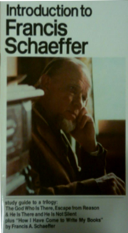
Now barring any opinions floating about, one of the things that we have discovered about Schaeffer is that he documents why he writes things, one need merely read him in his own words to get the story. In fact he writes a concise little article called How I Have Come To Write My Books, which can be found in his booklet, Introduction to Francis Schaeffer, a study guide to a trilogy. Likewise, Edith Schaeffer is an invaluable resource for learning how the works came about. So I wonder if some authors are going off of their own presuppositions and not doing their homework. Yet then again, perhaps they have and they have just formed their own opinion.

Now as I was reading Barry Hankin's article, I was struck by the fact that it contained many of the prevailing matters I often hear debated. So I decided to reply. My point here is not so much to take exception with Mr. Hankins but to show that I believe there are some other alternatives to the opinions that are being formed and propagated about Schaeffer. I believe they are worth examining before making judgments or characterizations that could serve to distort Schaeffer's legacy, but perhaps that is too late.

While I think the article by Mr. Hankins tries to be favorable, the problem is that I believe there are indeed some historical inaccuracies here. So graciously and respectfully, I would like to point out what I believe are errors:

1. )  "The answer lies in Schaeffer’s having been a complex individual with a wacky son" says Hankins.

The image of Franky spurring on his father is a myth propagated by Franky. Rick Pearcy suggested to Franky to tell his father to do an historical reply to the prevailing historical revisionism being put forward (Kenneth Clark, and Jacob Bronowski to be exact), and this became How Should We Then Live. Franky never mentions this. If one researches How Should We Then Live (see Francis Schaeffer an Authentic Life by Colin Duriez) you will find that Schaeffer had hoped to do this all along and he had told Edith this. So Franky's suggestion only solidified it for him. I am not saying he had no part in influencing his father. I am saying that the picture of him being thrust into the situation and polluted by his son is simply false. See my article here:http://francisschaefferstudies.blogspot.com/2011/11/origins-of-how-should-we-then-live.html

2. ) "There, he found Europeans not much impressed with American fundamentalist heresy hunting. " says Hankins.

While this has some plausibility, it is really an oversimplification. The more pressing reasons for his resignation and the start of L'Abri were wrapped up in the denominational in-fighting of the time they were on furlough in the states and where he was teaching "True Spirituality." Much to his surprise, it was not always well received, many in his denomination mistakenly perceived it was politically motivated.

3. ) Hankins states that one of the goals of L'Abri was to "argue young people into the Kingdom of God."

This wording is a mistake as it could be taken to imply that Schaeffer was a Rationalist, and he was not. He simply believed that a persons faith corresponded to the real world.

4. ) Hankins states that He Is There And He Is Not Silent is one of "Schaeffer’s first three books." 

This may have been a mere editing oversight but, He Is There And He Is Not Silent is not Schaeffer's third book, Death In The City is his third book and "He is There..." was not published until 1972. See Schaeffer's "How I Have Come to Write My Books" where he talks about how  he wished that he had published it third, but he did not. It is however the third book in the trilogy.

5. )  "Schaeffer’s career took another dramatic turn in 1974 when his twenty-two year-old son Franky talked him into making their first film, Whatever Happened to the Human Race?"

The book that Franky urged Schaeffer to do first was How Should We Then Live? in 1976. As stated earlier, although he did urge him, the idea was suggested by Rick Pearcy. Whatever Happened to the Human Race? I believe was published in 1979 not 74.

6. ) "More important than the film itself was the shift in Schaeffer’s tone."

This is of course a matter of opinion, but I would argue that it is inaccurate. One merely need to read Death In The City to hear many of the same tones from Schaeffer. In that book he address politics in passing at various times as well.

7. ) "Schaeffer began to call for the defeat of secular humanists, not their conversion"

Again, the same objection as #6. However, this statement is caustic and is simply untrue. Schaeffer never lost his evangelical emphasis. If he had, he would not have organized his combined works to show that he was pushing forward an entire concept... "The Lordship of Christ in every area of life... even politics." He comments on this goal in the preface of to A Christian Manifesto. His dedication of the book to Samuel Rutherford should also not be overlooked, for he says..."he has meant much to me for many years." Likewise, his book The Great Evangelical Disaster represents a significant evangelical ecclesiology.

These are respectfully, my opinion and I offer them for your consideration as I hope that Schaeffer scholars will consider that there are plausible answers in the midst of the ongoing debate. Thus I humbly submit to Mr. Hankins what I believe are errors in his interpretation of Schaeffer's legacy.

~ Dan Guinn